How To Register Company In The Netherlands?
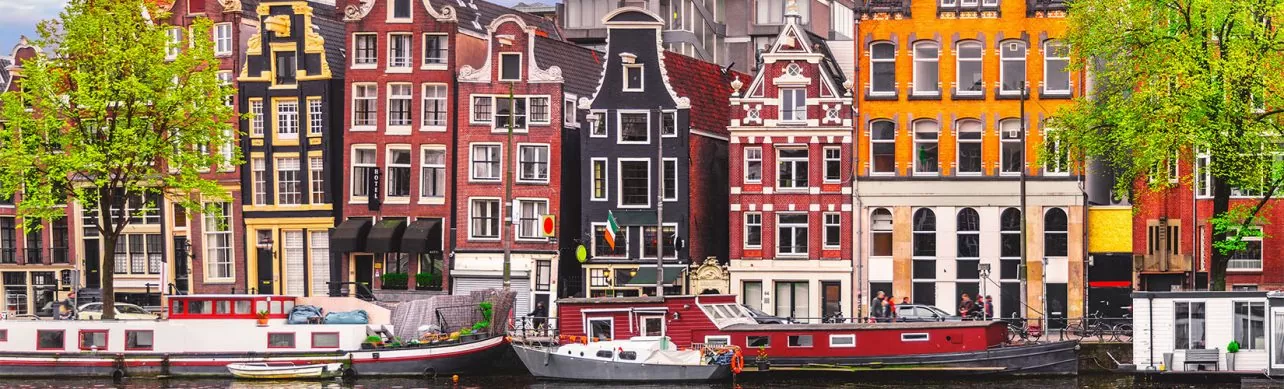
The Netherlands is a perfect place to start a new business in Europe as well as to open a European branch of a successful foreign company. Our experts have pointed out at least seven reasons to register a company in the Netherlands.
7 Advantages of Doing Business in the Netherlands
High living standards and a strong Dutch economy allow foreign entrepreneurs to gradually reach new heights in business and make plans for their company development for many years to come;
The strategic situation of the Netherlands as well as its political status open up a huge and rich European internal market of 500 million consumers to businesspeople;
An excellent transport and technological infrastructure together with a skilled multi-lingual workforce (up to 93% of the Dutch speak fluent English);
An attractive tax system allows for significant fiscal savings in some business areas;
A relatively simple company registration process in the Netherlands. The incorporation procedure takes only a few working days. Foreign entrepreneurs often start a business in the Netherlands through intermediaries without even leaving their home;
A well-developed network of international taxation, investment and economic settlement agreements makes it much easier to run international business with the help of a company registered in the Netherlands;
The Netherlands has special corporate and commercial courts where proceedings are in English.
What Is Best Type of Company for Registering Business in the Netherlands?
The majority of foreign businesspeople open a company in the Netherlands as a BV (Bestolen Vennootschap) or a private company limited by shares. The BV is popular for the following reasons:
The liability of all BV founders is limited to the amount of their contributions to the company;
The minimum amount of starting capital is €1, but it is common to pay €2,500 and more. Sometimes corporate advisers say ironically that shareholders of a Dutch BV have almost no responsibility for its performance;
The starting capital of a limited liability company in Holland can be paid up after the incorporation procedure;
Directors and founders of the BV can be of any nationality and tax residency. They can be both individuals and legal entities;
It is allowed to start trading already in the process of company registration;
There are practically no restrictions on the types of business for companies of this form of incorporation. And for some business activities (e.g. licensing and shipping), your BV will receive significant tax incentives from the government;
Registration of a private limited company in the Netherlands takes only a few days.
Taxation of Dutch Companies
There is no fixed corporate income tax in the country. Every year there are new terms of tax calculation or the corporate tax rate itself changes.
The standard corporation tax rate is currently 25%. A reduced tax rate is applied to income of up to €200,000. If the income is above this amount, the standard rate is used for calculation. Dutch companies with relatively small annual revenue pay less.Imperial & Legal’s specialists have prepared a table comparing three years.
| Year | Taxable company income in € | Corporation tax rate |
| 2020 | up to 200,000 | 16.5% |
| 200,001 and more | 25% | |
| 2021 | up to 245,000 | 15% |
| 245,001 and more | 25% | |
| 2022 | up to 395,000 | 15% |
| 395,001 and more | 25% |
There are several areas of the economy where companies registered in the Netherlands pay corporation tax at a reduced rate. For example, this exemption applies to shipping companies and intellectual property service companies.
The Dutch VAT is 21%. For some types of goods and services, such as food, the Netherlands has a 9% VAT rate.
Reporting for BV Companies Registered in the Netherlands
Your company is obliged to keep bookkeeping and statistical records. The size and complexity of corporate reporting in the Netherlands are directly related to the size of the business:
Micro business;
Small business;
Medium-sized business;
Large business.
Dutch medium-sized and large businesses submit more detailed financial accounts to the Chamber of Commerce and undergo an audit.
Three attributes determine the size of a business. Your company will be considered a micro, small, medium-sized, or large if at least 2 out of the 3 attributes apply.
Determining the size of a Dutch company
| Criterion | Micro | Small | Medium-sized | Large |
| Assets in € | Less than 350,000 | 350,000 – 6,000,000 | 6,000,000 – 20,000,000 | Over 20,000,000 |
| € Revenue | Less than 700,000 | 700,000-12,000,000 | 12,000,000 – 40,000,000 | More than 40,000,000 |
| Employees | Fewer than 10 | 10-50 | 51-250 | More than 250 |
The figures in the table are for the first fiscal year of the company. As it is rare for a company to be registered exactly on 31 December, the founders are given the right to decide whether their first fiscal year will be long, short or coincide with the calendar year.
A short fiscal year is when a company registered in the Netherlands decides to file reports for the period from the incorporation date to the end of the calendar year.
The duration of a long fiscal year must not be longer than 23 months.
Medium-sized and large companies are more likely to choose the long reporting period as their first fiscal year because a small business may show atypical results over a longer period and receive an inappropriate assessment.
What Type of Reporting Does a Dutch Company Prepare and Submit?
| Frequency | Report title | Conditions |
| Monthly | Payroll report | If the company has employees |
| Quarterly | VAT return | |
| Annually | Accounts to the Chamber of Commerce | |
| Report to the Bureau of Statistics | ||
| Corporate income tax return | ||
| Audit | For medium-sized and large companies |
Starting a Company in the Netherlands
As mentioned before, registering a Dutch company through a professional corporate adviser will not take much time, especially if all the necessary documents are prepared in advance. This jurisdiction is distinct from others in that, first of all, a notary helps establish a company and only then it is registered with the Chamber of Commerce.
Company Registration in Holland: Step-By-Step Guide
Name for the Future Company
The requirements for the company name are similar to the requirements in other European countries:
The name you come up with must not violate the rights of third parties in any way. It must not mislead them, repeat or imitate the names of already registered companies and trademarks;
Only allowed letters and characters may be used in the name.
As a rule, entrepreneurs come up with several options of the name. You can check whether the name is unique or not in the Business Register of the Dutch Chamber of Commerce or on the website of the Benelux Intellectual Property Office.
Information and Documentation for the Agent
To prepare the incorporation documents for your BV company, you should provide the agent with the following information:
Reserved name of the company;
Information about the founders and directors;
The company’s registered office in the Netherlands;
Areas of activity;
Information about the authorised capital divided into shares of a nominal value;
Restrictions for the transfer of company shares to other persons;
Fiscal year (duration of the company’s first reporting period);
Management and control data.
In the Netherlands, neither the number of company directors nor their nationality, tax status and place of residence are restricted. However, if a company has more than one director, a Board of Directors should be set up and one of the directors should be appointed as its chairman.
What documents do I need to prepare before contacting an agent?
For individuals For legal entities A copy of the passport; notarised, and in some cases translated and apostilled. Extract from the Business Register or other document confirming the fact of registration, if the founder is a foreign company. Social security number and proof of residential address (for Dutch residents). Incorporation documents of the company (in some cases). Notarisation
As a rule, a notary assists in opening a company in the Netherlands. Based on the information provided by the future businesspeople, a notary prepares the Articles of Association (in Dutch and, at the client’s request, in English).
After the Articles are prepared, shareholders are recorded in the register containing information about the founders of the company, shares, encumbrances, etc.
A BV is established by notarising the certificate of incorporation which includes the Articles. The notarial certificate of incorporation is drawn up in Dutch, but it can be followed by an English translation if necessary.
When all the incorporation documents are ready, they are signed by the company founders or by their representatives with a power of attorney before a notary. Therefore, to open a company in the Netherlands, you need to personally come to the notary’s office or delegate the shareholder’s powers to your representative.
Registering a Company at the Dutch Chamber of Commerce
The documents must be submitted to the Chamber of Commerce for registration within 8 days from the date of incorporation.
The KvK or Dutch Chamber of Commerce is the official supervisory body responsible for the registration, reorganisation and liquidation of Dutch businesses.Moreover, upon request, the KvK can provide the registered office, areas of activity and management information of any company registered in the Netherlands.
After verifying the documents provided by the notary, representatives of the Chamber of Commerce register the new company and assign it a unique 8-digit KvK number. The information about your company is also automatically transferred to the tax office.
Thus, the whole process of opening a company in Holland takes about 7 working days:
Selection and verification of the company name take one day;
Meeting with a notary, execution of corporate documents and notarial incorporation of the company take another 1-2 days;
Another 2-5 days are needed to register a company with the Chamber of Commerce.
Opening a Corporate Bank Account
If the company is registered by non-residents, it may take several months to open a current account with a Dutch bank. To avoid waiting for a long time, foreign entrepreneurs use online banks or banks outside the Netherlands or register with international payment systems.

Company Registration in the Netherlands with Imperial & Legal
London office of Imperial & Legal is staffed with highly qualified corporate advisers with many years of successful experience in the UK and the European Union.
By consulting our specialists, you will not only open a Dutch company in a short period but also gain all the benefits of doing business in the Netherlands.