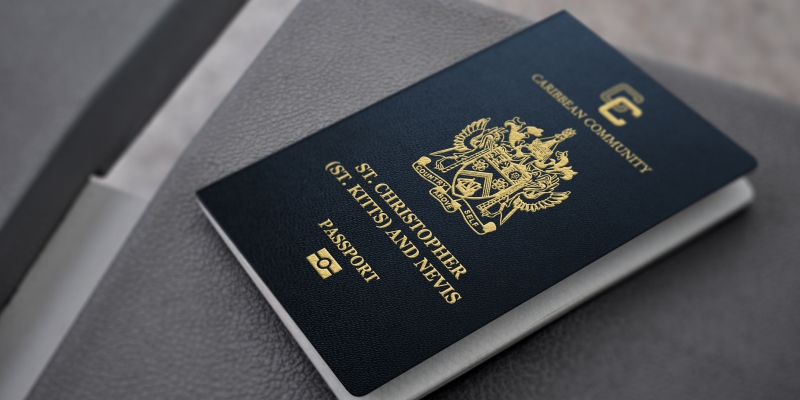
A government programme to grant economic citizenship to foreign investors was first launched in 1984 in St. Kitts and Nevis. At that time, the main source of revenue for the budget of these Caribbean islands was income from the cultivation and processing of sugar cane. In order to attract additional investment into the economy, the authorities of St Kitts and Nevis offered citizens of other countries their passport in exchange for donations to the sugar industry diversification fund. Although the island nation’s investment citizenship programme has undergone significant changes, it is still considered the “platinum standard” that other countries look to when planning to attract investment from abroad.
The more successful and enterprising a person is, the more often he or she considers applying for a second passport. The desire to obtain citizenship of another country is dictated not so much by a lack of patriotism as by the huge number of opportunities that will open to the holder of multiple citizenship.
Nowadays, more and more young professionals prefer to work remotely, which means that they are not significantly tied to any one country. What recently seemed like a bold fantasy has now become a reality. Holders of multiple citizenship move freely around the world, looking for and finding lucrative jobs, launching interesting business projects and receiving high-quality, modern education in the best educational institutions.
Globalisation of the world economy has accelerated all these processes many times over. 50 years ago you could get a second passport by birth right, through marriage to a foreigner or after a long naturalisation process. Now you only need to invest in the economy of a jurisdiction that grants economic citizenship. Such programmes are widespread all over the world, but the most interesting conditions are still offered in the Caribbean countries and Europe.
Citizenship by investment allows you to obtain a second passport in a short time, bypassing lengthy naturalization processes. This citizenship grants visa-free access to dozens of countries, including Europe, Asia, and the UK, greatly simplifying travel. You also gain the opportunity to optimize taxes while maintaining confidentiality. The program extends to your family, offering them the same benefits and new opportunities for a comfortable life and business.
Caribbean passport: Your ticket to a visa-free world
Unlock the World with a Caribbean Passport: Enjoy Visa-Free Travel Across the Globe

Why do people invest in second citizenship?
A mild climate, free movement around the world, security guarantees, safety of your capital, tax optimisation, quality of education and medicine — there is sure to be a country whose passport will provide you with the maximum of these opportunities. Imperial & Legal experts have identified 7 common reasons for obtaining economic citizenship in another country.
1. It is easier for an investment programme participant to obtain a second passport
Few people can become a citizen of another country faster than a foreign investor! By investing heavily in the national economy, you receive special treatment from the immigration authorities. In order to obtain a second passport, a participant in an investment programme does not need to learn the language, prove his or her education or thoroughly understand the traditions of the new homeland.
The timeframe for obtaining economic citizenship can vary. From the moment of application to the issuance of a new passport takes from 1.5-2 months to 1 year. However, even the longest procedure of obtaining a second passport in exchange for investments is not in comparison with the naturalisation process, which in some European countries takes 6-12 years.
2. Freedom of movement
A common reason for an investor to participate in a passport programme is their desire to travel and move from one country to another without tedious red tape.
The “strength” of a second passport is measured by the number of jurisdictions willing to allow its holder to enter their territory without a visa or under a simplified procedure. Every year, a ranking is compiled, in which the leading positions are taken by the states with the strongest passports.
For example, the investment citizenship of St Kitts and Nevis, which we mentioned earlier, allows you to cross the borders of 157 countries of the world relatively freely. And with a Maltese passport, you can visit 190 jurisdictions without a visa or under a simplified scheme, when the entry permit is issued upon arrival. The Maltese passport also allows you to live and work in any EU member state without any restrictions.
Together with a Caribbean passport, you will have the right to stay in Schengen countries for up to 90 days within six months, and in the UK, as a former metropolis, with such a document you can stay up to 180 days. The proximity of Caribbean jurisdictions to Asian countries allows citizens to apply for a long-term US visa and opens the borders of Singapore, Hong Kong and China.
3. Comfort and safety
A second passport allows you to change your place of residence in case of unforeseen circumstances. The holder of multiple citizenship can easily move to a safer country with a stable economy and low crime rate.
A European passport gives a foreign investor and his family the opportunity to move to a safe country with a developed healthcare system. Children will be able to receive quality education in the best European educational institutions. In terms of the sum of rights and obligations, economic citizenship is almost no different from ordinary citizenship.
The Caribbean countries are not lagging behind Malta. In the decades since investment programmes were launched, these jurisdictions have become blossoming tropical resorts with well-developed tourism infrastructure.
4. Confidentiality
Why is the confidentiality of the immigration programme so important? The fact is that in some countries it is restricted or even prohibited by law for citizens to obtain a second passport.
A special feature of modern passport programmes in the Caribbean is that information about participants is not made publicly available and is not provided to third parties. If you do not disclose it yourself, information about your second passport will not leave the country of which you have decided to become a citizen.
Malta is a country where it will be somewhat more difficult to retain information about your economic citizenship, as under current rules the official list of new citizens is regularly published in the local newspaper, but with no indication of the pathway to citizenship.
5. Second citizenship for relatives
As already emphasised, economic citizenship is full-fledged and differs almost nothing from the citizenship of local residents. It is granted to the investor and his/her relatives for life and can be inherited.
Depending on the country granting citizenship by investment, you will have the option of applying for a passport for your relatives: spouses, minor children and, in some programmes, adult children, parents, forebears and even siblings.
6. Tax optimisation
The holder of investment citizenship, together with a new passport, gains access to tax incentives and lenient tax laws of the second home country. In most countries with passport-for-investment programmes, there are no inheritance, capital gains, gift, wealth or foreign income taxes.
The most interesting opportunities to optimise the tax burden are available in the Caribbean island states. For example, in Dominica, the government has set zero rates on as many as 7 taxes, including property tax. Citizens of St. Kitts and Nevis, as well as residents of Antigua and Barbuda, do not pay taxes on all their income, regardless of where it originates.
7. New business opportunities
The long period of the passport programme and the resulting saturation of the economy with foreign investment have a favourable effect on the business climate in the country. Most jurisdictions with investment programmes have strong, rapidly growing economies that are convenient for registering and doing international business. In tax havens, foreign profits of offshore companies are not taxed.
However, even if your company operates in the place of registration, you will be pleasantly surprised by the relatively low corporate tax rate. It is much easier for holders of a second passport to do business abroad, no matter what tasks are involved — registration of the company and assets, interaction of the entrepreneur with foreign banks, etc.
What is required to obtain a second citizenship for investment?
While the requirements for participants in investment programmes can vary greatly from country to country, common selection criteria exist and will be listed.
Requirements for the applicant and his/her relatives
As a rule, only adult foreigners can invest in a second citizenship. Both the main applicant and his/her relatives applying for a passport must be in good health and have a good reputation.
Availability of cash
To obtain a second passport, you do not have to be a multimillionaire or a Hollywood celebrity. But the applicant must have free access to the funds necessary for investment, the legality of the origin of which he can prove.
You can only invest in options that are covered by the rules of the passport programme. If your investment is not a grant, you will be able to recover a significant part of your investment after a few years.
Country ownership
As you know, future investment citizens are not forced to learn the language or take a test to learn the peculiarities of life in the country. But in a number of countries you will have to visit your second home country or even settle there for some time in order to obtain a passport.
If you need a Caribbean passport, most jurisdictions will allow you to apply for citizenship for investment remotely, without being present in person.
Citizenship for investment in figures and facts
The prototype of modern programmes of granting economic citizenship by investment was the system of fixed taxation invented in the 19th century in the Swiss canton of Vaud. Wealthy foreign citizens had to pay an annual lump sum tax for the right to reside in the territory of this administrative unit.
In its familiar form, the investment immigration programme was first launched in 1984 in the islands of St. Kitts and Nevis.
190 state entities can be visited without a visa or under a simplified procedure, when a visa is issued immediately upon arrival, by the holder of a Maltese passport. But it is Malta that takes the longest time for investors to obtain citizenship. The process takes at least 14 months.
The shortest time from application for citizenship to receipt of the passport is about 60 days. This is how long it will take for the fast-track citizenship-by-investment process in St Kitts and Nevis.
The most affordable passport programmes are in the Caribbean islands. Citizenship costs $100,000 for a single foreign investor in Dominica, St Lucia and Antigua and Barbuda. But to find the most affordable investment programme in the Caribbean, you need to consider the applicant’s circumstances and the administrative fees, which typically range from 7 to 10% of the amount invested.
If the additional government fees are counted along with the amount of the non-refundable contribution to the economic development fund, the most favourable conditions for the non-family investor will be in Dominica.
How to invest in a second citizenship?
Caribbean passport programmes usually have more investment options than similar programmes in Europe. With the help of our consultants, the prospective programme participant should select the investment option that best suits his or her needs before applying for immigration.
Citizenship investment options can be as follows:
A non-refundable contribution to the state’s economic development fund;
A voluntary donation to a charity or educational foundation;
Buying or long-term leasing a property;
Mutual participation in investment funds, purchase of securities of local companies;
Opening a company, creating new jobs for citizens and permanent residents of the country.
A large part of the investment options assume that after a few years (3 to 7 years) you will be able to return the money you have invested. In Malta, it is common to suggest that a participant in the programme should make an all-inclusive investment, i.e. donate a portion of the money permanently to the government’s economic development fund and use the remaining money to buy property and/or securities.
Variety of investment citizenship programmes
For many years Imperial & Legal employees have been providing reliable support in obtaining investment citizenship. The most interesting conditions for foreign investors are offered by literally several countries of the world, which we list in our summary table.
from € 690 000
14-36 months
from € 250 000
3-4 months
from € 100 000
3-6 months
from € 100 000
3-4 months
from € 150 000
3-4 months
from € 100 000
3-6 months
The investment amount is stated excluding administrative fees.
Economic immigration with Imperial & Legal
Our consultants will find the most suitable passport programme and country for you, whether you are looking for visa-free travel around the world, tax optimisation, opening an offshore company or ensuring comfortable accommodation for your family and parents.
Imperial & Legal is committed to an individual approach to each client, so we do not limit ourselves to legal support of investment immigration. Every day our specialists deal with hundreds of issues related to organising a move abroad, registration of a foreign company, opening accounts in foreign banks and profitable investment placement.