Everyone knows that there is no such country as the Caribbean — it’s an entire region in the Caribbean Sea that includes a group of island nations.
The Caribbean is home to some 7,000 islands, dozens of countries and colonial possessions. And only a few tiny island nations in the Caribbean have investment programmes where you can become a second passport holder for a relatively small investment.
It is worth noting that the modern history of investment citizenship programmes began in this corner of the globe when the Federation of St. Kitts and Nevis began issuing passports to foreign investors back in 1984 in exchange for subsidies to the sugar industry diversification fund.
Since then, economic immigration has become an extremely popular way of attracting foreign capital not only in the Caribbean but also in Europe. However, the most interesting conditions for investors are still offered in the region where passport programmes first appeared.
| Country | Investments in real estate ($) | Non-cash donation ($) |
| Dominica | 200,000 | 200,000 |
| St Kitts and Nevis | 400,000 | 250,000 |
| Grenada | 270,000 | 235,000 |
| St Lucia | 300,000 | 240,000 |
| Antigua and Barbuda | 300,000 | 230,000 |
A second passport issued in the Caribbean jurisdiction is chosen not only by celebrities, popular artists and athletes, but also by people who value their time and freedom. For a modern person, the ability to travel the world without hindrance and periodically change the place of residence has become an essential necessity.
Our specialists will be happy to help you and your family find a customised solution when planning your second citizenship. Our experience and knowledge allow us to minimise not only the investor’s mistakes, but also his personal involvement in the second citizenship procedure.
The advantages of Caribbean citizenship by investment programs are immense and hard to fully appreciate. With this program, you and your family will obtain second passports that grant access to global opportunities, offer a secure backup plan, and enable effective tax optimization. All these benefits are available in a remarkably short period and with a relatively modest investment, enhancing your global mobility and financial flexibility, while providing greater stability and security for you and your loved ones.

Economic citizenship programmes in the Caribbean
Currently, the most interesting conditions for foreign investors are offered by 5 Caribbean jurisdictions. The passports of these island states are relatively inexpensive, and the opportunities for new citizens are almost the same as citizenship of a European country.
-


- Passport in 2–4 months
-

- Fast-track in 45–60 days
-

- Visa-free 140+ countries
-

- Dual citizenship permitted
-

- Favourable tax regime
-

- No residency requirements
-

- Citizenship for the whole family
-

- Full confidentiality
 ST KITTS & NEVIS >
The longest-running and one of the most respectable Citizenship by Investment Programs in the world. Worldwide mobility, accelerated processing and 100% confidentiality in return for your contribution in the fast-growing national economy.
 DOMINICA >
Minimum investment and quick processing time, with money recoverable after 3 years, as opposed to 5 years in other programs. No residency, visitation, language or interview requirements.
 ANTIGUA AND BARBUDA >
One of the lowest-cost Citizenship by Investment Programs in the world. Opportunity to invest in a growing economy en route to diversification through various options. No education requirement or work experience needed.
 GRENADA >
Invest in the development of this emerging economy with vast business opportunities. The only Caribbean state offering visa-free travel to China. Opportunity to apply for the E2 visa to the United States to be able to work and bring family there.
 ST LUCIA >
Efficient and streamlined application process. A range of attractive investment options and flexible terms. Dual nationality and second passport for the whole family and future generations.
ST KITTS AND NEVIS
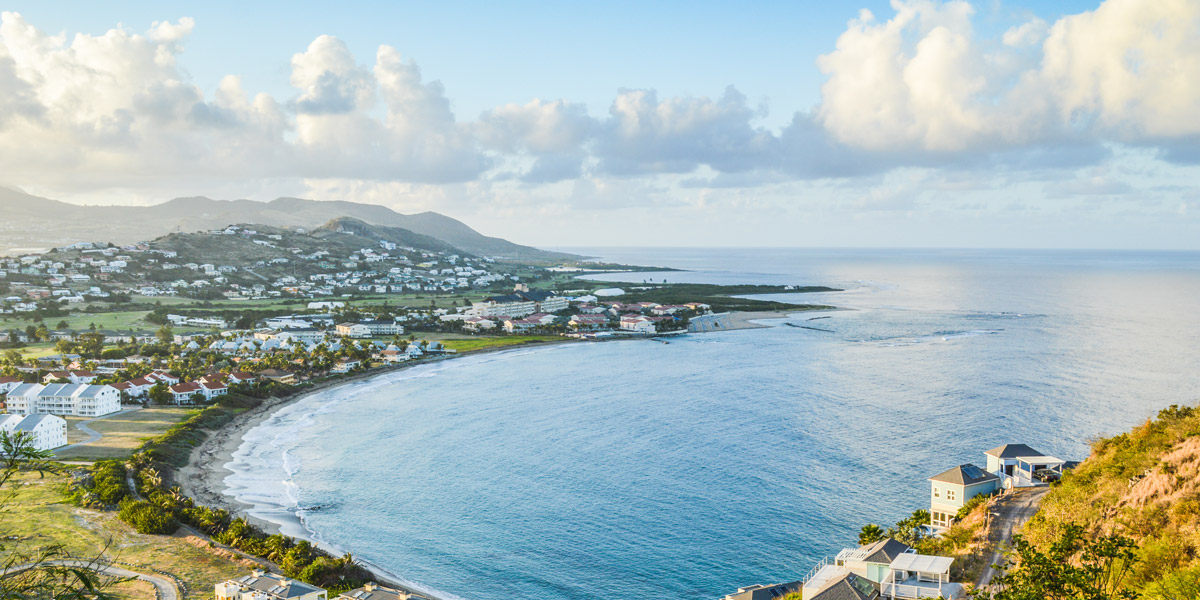
A relatively small country made up of 2 islands: the lively St Kitts and the more secluded Nevis. This country is a popular tourist destination, but to be fair, it is more of a port for cruise ships passing through the islands. There is not much pristine nature and pristine ocean beaches there, as these territories have long been intensively developed by people.
The jurisdiction benefits from a developed economy, not only in tourism and services, but also in the production and export of spices and cane sugar. St Kitts and Nevis’ impressive financial and banking sector deserves special praise, allowing wealthy foreigners to protect their assets confidentially and carry out effective tax planning.
Citizenship by Investment Programme in Saint Kitts and Nevis
These islands began offering passports in exchange for investment back in 1984. St. Kitts and Nevis is considered to be the pioneer in offering investment citizenship. In 30 years, the rules for the passport programme have changed several times. However, this does not prevent the jurisdiction from setting the standard for similar investment programmes throughout the rest of the world.
You can get a St Kitts and Nevis passport for your contribution to the economy if:
- Spend at least $400,000 to purchase a government-approved property on one of the islands. This is usually a share in one of the hotels or an entire resort complex under construction. In this jurisdiction, the applicant can purchase ordinary flats and houses, which will be considered an investment for economic citizenship under certain circumstances. By law, after 7 years, the investor can sell his/her real estate property to recover the investment;
- Donate an amount of $250,000 or more to a government development fund, or spend an equal amount to finance the construction of a social or infrastructure property, which will then become the property of the state.
The cost for an investor to acquire a second citizenship in St Kitts and Nevis varies depending on the number of relatives they plan to include in their application, as in addition to the basic investment, some amount will be spent on registration fees, government fees and security checks.
DOMINICA
This small island nation has become one of the most attractive tourist destinations in the Caribbean, where modern civilisation is juxtaposed with corners of primitive nature and stunningly beautiful beaches. Dominica is a port of call for huge cruise ships. And once an international airport is built, the jurisdiction will become an important transport hub linking the Caribbean with the rest of the world.
Wealthy foreigners are primarily interested in Dominica as a country with one of the most affordable passport programmes.
Citizenship by Investment Programme in Dominica
To become the proud owner of a Dominican passport, a foreign investor invests in the economy of their second homeland in one of two ways:
- Donates to the government-established Economic Diversification Fund — from $200,000 for a single investor;
- Purchases a property approved by the Dominica authorities with a value of at least $200,000. After 5 years, the programme participant gets the right to sell his share in the hotel or individual apartments, and until then he can count on a small but regular income in the form of dividends or rent.
The final cost of Dominica economic citizenship depends on the number of relatives in the investor’s application.
ANTIGUA AND BARBUDA
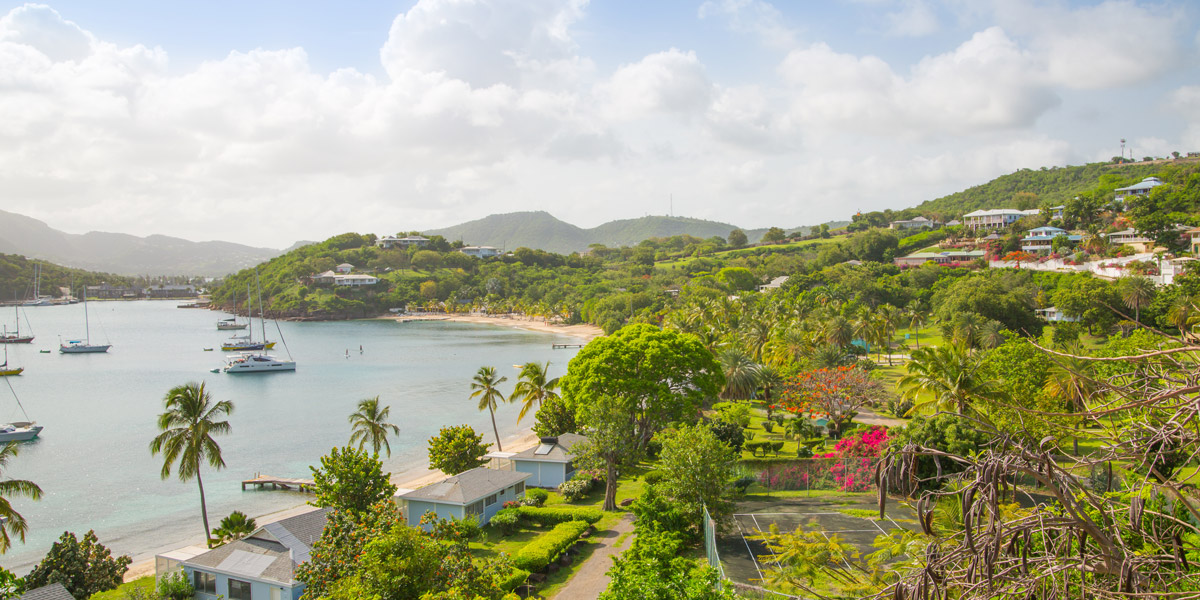
The rugged volcanic landscapes and picturesque beaches of the tropical islands of Antigua and Barbuda attract more and more fans of extreme sports and wildlife enthusiasts from all over the world every year. This small island nation also offers good conditions for international companies to operate.
But we are interested in the country called Antigua and Barbuda primarily because of its unique investment programme.
Citizenship by Investment Programme in Antigua and Barbuda
In this island nation, foreign nationals are offered 4 options to participate in the investment programme:
- Donation of $230,000 or more to the National Development Fund. This is a rather favourable investment option, as after spending this amount you will be able to obtain Antigua and Barbuda passports for a family of 4.
- Purchase of local property from $300,000. There are various options for investing in real estate: sole ownership of an object or joint purchase from a government-approved agent, purchase of real existing apartments in full or shares of five-star resort hotels. After 5 years you can profitably resell the property on the islands and recover a significant portion of your investment.
- Donation to the University of the West Indies Foundation. This is one of the most interesting investment options as you will get the opportunity to formalise citizenship for a family of 6 by donating only $260,000.
- Investing in a locally approved business project is suitable for foreign entrepreneurs who see Antigua and Barbuda as a convenient tax haven to incorporate their international company. In this option, your minimum capital investment must be at least $1,500,000. The minimum investment amount for a team of investors is $5,000,000, of which one applicant’s portion can be as little as $400,000 (assuming his or her business partners invests the remaining amount).
GRENADA
Grenada is a country with stunning natural scenery and vibrant cities surrounded by picturesque mountains and valleys. The economy of this island nation has long been linked to trade and agriculture. However, in recent years, the banking and financial services sector has developed more. Grenada is one of the most cryptocurrency-friendly jurisdictions, which is why cryptocurrency investors are magnetically drawn here from all over the world.
Grenada’s investment citizenship allows free crossing of UK and EU borders. Grenadian passport holders can travel to China without a visa. They also have access to a US E2 visa, which allows them to stay in the United States for extended periods of time.
Citizenship by Investment Programme in Grenada
There are two ways to invest in economic citizenship in Grenada:
- Donation of funds to the National Transformation Fund established by the island authorities. If a single investor applies, the investment amount will be $235,000. This figure will be higher if the programme participant adds family members to the application.
- Purchase of property on the island, costing from $350,000. Investments can be made only in projects approved by the government. Investors buy individual objects in their entirety (bungalows, villas, apartments) or invest in the construction of modern hotels and tourist complexes. As a rule, after 5 years of ownership, the investor sells his real estate in Grenada to recover a significant part of the invested funds.
SAINT LUCIA
St Lucia is one of the largest island nations in the Caribbean. It is known for its natural beauty, fascinating culture, distinctive cuisine and hospitable locals. As with other countries in the region, it took some time after independence for Saint Lucia to transform itself into a thriving tourist destination. This tropical paradise offers an optimal environment for international business.
St Lucia is often mentioned in tabloid headlines as the country of second citizenship for millionaires and celebrities. The jurisdiction offers a wide range of options for enterprising foreigners to obtain a second passport for investment.
Citizenship by Investment Programme in Saint Lucia
Security combined with a variety of investment options make second citizenship in this country attractive to many different types of overseas investors. Saint Lucia’s passport programme provides four investment options to choose from. No investment is made until the prospective programme participant has been approved by the authorities. Let us consider each of the options for investing in economic citizenship of Saint Lucia in more detail:
- Non-refundable contribution to the National Economic Fund. If you prefer quick solutions that will allow you to actually purchase a second passport, we recommend donating $240,000 to the economic fund established by the government of Saint Lucia. Such donation allows to get a St Lucia passport for the applicant, their spouse and 2 minor children.
- Purchase of property from a developer approved by the authorities at a cost of $300,000 or more. The investor is given the opportunity to invest in the construction of a hotel complex or to spend more than the specified minimum for the purchase of a separate cottage or apartments. After 5 years of ownership, the property purchased as an investment can be sold at a profit.
- Purchase of non-interest-bearing government bonds of $300,000 or more. National Action Bonds are purchased by investors for 5 years. At the end of this period they can be sold at the same price.
- Investment in a business approved by the authorities of not less than $3,500,000. The law allows foreign entrepreneurs to make joint investments if the total amount of investment is $6,000,000 and the share of each foreign participant in the programme is at least $1,000,000.
| Tax | St Kitts and Nevis | Antigua and Barbuda | Dominica | Grenada | St Lucia |
| Personal income tax | – | – | ✓ | ✓ | ✓ |
| On foreign income | – | – | – | – | – |
| On the property | ✓ | ✓ | – | ✓ | ✓ |
| On wealth | ✓ | – | – | – | – |
| Inheritance | – | – | – | – | – |
| On donation | – | ✓ | – | – | – |
| For capital gains | – | – | – | – | – |
| Stamp duty | ✓ | ✓ | – | – | ✓ |
«√» — tax rates apply.
«—» — no tax applies or tax rate is 0%.
What are the requirements to be a participant in the Caribbean Passport Programme?
All 5 jurisdictions have roughly the same requirements for potential passport programme participants:
- The principal applicant must be of legal age. In other words, you cannot invest in Caribbean citizenship until you are 18 years of age;
- A participant in the passport programme must be in good standing. No unexpunged criminal convictions, criminal convictions, or recorded immigration offences will be tolerated.
Caribbean island governments conduct Due Diligence checks on participants in the passport programme, including the principal applicant and his or her dependants over 16 years of age (in some countries, children over 12 years of age are checked).
The verification procedure is fee-based and costs the principal applicant $5,000-$10,000, depending on the country. Dependents cost between $2,000 and $7,500 depending on their age and jurisdiction of future citizenship.
To find out the exact cost of Due Diligence and other additional fees involved in applying for investment citizenship in the Caribbean, book a consultation with a specialist from our company;
- The amount of investment depends not only on the selected country, but also on the number of persons indicated in the application. The figure will be higher if the programme participant adds family members to the application;
- A prerequisite for participation in the passport programme is to make an investment under one of the options available in a Caribbean jurisdiction;
- All interactions between a prospective Caribbean passport holder and the authorities are done only through an official investment programme agent. Investment Programme Agents are usually lawyers residing directly on the islands who are authorised by the State to do so.
Lists of authorised agents are published on the official government websites of Caribbean jurisdictions that grant their citizenship for investment.
Imperial & Legal can help you obtain a Caribbean passport quickly and without the hassle of travelling to the other side of the world. Our trusted agents on the islands communicate quickly and professionally with all government departments responsible for the investment programme. Therefore, economic citizenship will be granted to you remotely and within the statutory timeframe.
| Country | Family members who may be included in the application |
| Grenada | Husband or wife, financially dependent children under age 30, parents, grandparents over age 55, and unmarried siblings over age 18. |
| St Kitts and Nevis | Spouse, financially dependent children under age 30, parents, grandparents age 65 and older. |
| Dominica | Husband or wife, financially dependent children under 30, parents, grandparents age 55 and older. |
| Antigua and Barbuda | Spouse, financially dependent children under the age of 30, siblings (they must not be married), parents, grandparents age 55 and older. |
| St Lucia | Husband or wife, financially dependent children under age 30, brother/sister under age 18, parents and grandparents age 55 and older. |
Special Conditions:
- St Kitts and Nevis’ restrictions on nationals of certain countries are worth mentioning separately. If you are a proud holder of a passport from North Korea, Afghanistan, Iraq, Iran, Russia and Belarus it is likely that the authorities of this Caribbean state will not allow you to participate in their investment programme;
- In Dominica, partial restrictions are imposed on nationals of Sudan, Yemen, North Korea, Russia and Belarus. An application from such investors will only be accepted if they have not lived in their home country for the last 10 years, do not do business there and do not have substantial assets there;
- Holders of investment citizenship in Antigua and Barbuda must visit their second home country within 5 years of receiving their passports in order to have the opportunity to renew their citizenship. Most expats combine this “obligation” with their holidays;
- Most passport programmes in the Caribbean involve what is known as a telephone interview with the principal investor, as well as with those relatives who were included in the application for economic citizenship. The rules of many Caribbean programmes also stipulate that immigration authorities may ask the investor to attend a face-to-face meeting during the application process.

3 most common myths about investment citizenship in Caribbean jurisdictions
Despite the abundance of information on the internet about the nuances of obtaining a Caribbean passport, potential investors often dispel the same myths during consultations at Imperial & Legal. Let’s take a look at the most common misconceptions about participating in Caribbean investment programmes.
Myth 1: Nationals of other countries can apply for Caribbean citizenship on their own for investment
This is a misconception, as an overseas investor’s interaction with the relevant government authorities is only done with the help of a programme agent approved by the authorities. And to ensure that you have a reliable representative in the islands, it is better to immediately seek the assistance of experienced immigration lawyers.
At the first consultation, the law firm will select the best investment option, taking into account the wishes and circumstances of the client. Our experts go further and conduct a preliminary screening of the investor to objectively assess their chances of participating in the passport programme. Our permanent representative on the island will take care of the preparation and transmission of your documents, as well as effective communication with the department responsible for the investment programme. If you prefer to invest in property, our agent will also carry out additional on-site due diligence on your preferred developer and project.
Working with experienced immigration attorneys, you will quickly gather all the documents you need to participate in the programme and be able to obtain a Caribbean passport without leaving your country.
Myth 2: Caribbean island states are blacklisted as offshore zones
This statement is a great exaggeration. In recent times, St Kitts and Nevis, Grenada, Antigua and Barbuda, Dominica, St Lucia, are extremely concerned about their business reputation. This is why foreign investors are thoroughly vetted before they are given the opportunity to become new citizens in these countries.
Caribbean jurisdictions attract investors with a mild tax climate and favourable conditions for entrepreneurs, especially if the latter are developing foreign markets.
There are many blacklists around the world, some of which do include Caribbean countries. The Organisation for Economic Co-operation and Development lists are recognised as the most significant. Also important are the OECD and European Union lists, on which the island states listed earlier do not appear.
Myth 3: In order to obtain citizenship in the Caribbean, an investor needs to live in a favoured state for a certain period of time
One of the most popular misconceptions. This myth most likely arises when two different processes are confused: obtaining Caribbean citizenship through naturalisation and obtaining a Caribbean passport through investment. In the first case, you do need to live in the country for a period of time before you are granted citizenship status.
A passport for investment is issued relatively quickly and without the requirement to live on the island for several years. Moreover, most Caribbean economic citizens have obtained their citizenship remotely and do not even plan to ever visit their second homeland in person.
From $250,000
Investment starts
2 to 4 months
Processing time
147 countries
Visa-free/visa-on arrival
In 5 years
Investment recoverable
Passport in 45-60 days
Fast-track option
From $230,000
Investment starts
3 to 4 months
Processing time
143 countries
Visa-free/visa-on arrival
In 5 years
Investment recoverable
4 investment options

From $200,000
Investment starts
3 to 6 months
Processing time
133 countries
Visa-free/visa-on arrival
In 3 years
Investment recoverable
Best program for a single investor
From $235,000
Investment starts
3 to 4 months
Processing time
137 countries
Visa-free/visa-on arrival
In 3 years
Investment recoverable
Opportunity to get an E-2 work visa to the USA
From $240,000
Investment starts
3 to 4 months
Processing time
139 countries
Visa-free/visa-on arrival
In 5 years
Investment recoverable
4 investment options
5 steps to obtain a passport
Our qualified professionals have been successfully working with Caribbean investment immigration programmes for many years. Our specialists are ready to assist high net worth individuals and their families in obtaining a second passport.
One of the key principles of our company is an individual approach and tailor-made solutions for each client. Therefore, you will receive comprehensive legal support to select and obtain the passport programme that best meets your needs. In complicated cases, our specialists will be able to recommend possible solutions to the problem and ways of obtaining a passport of the chosen country, as well as act as intermediaries in negotiations with state authorities to achieve an optimal result.
The process for an investor to obtain a Caribbean passport can be divided into 5 stages.
Consult Imperial & Legal and sign a contract
Our specialists act as intermediaries between the applicant and government departments in Caribbean countries implementing citizenship by investment programmes. Consultation with an Imperial & Legal specialist can be conducted in the office, by telephone or by video link.
After signing the client agreement, our staff will carefully examine the client’s situation in order to eliminate the possibility of rejection already at the preliminary stage of preparation and to present your individual circumstances in the most favourable light.
Preparation of documents and sending the application
Our specialists will prepare all the documents to be attached to the citizenship application. All copies of documents must be notarised and legalised.
As part of this stage, all applicants are required to undergo a medical examination and provide the necessary certificates.
If you invest in property, you should choose an interesting project in advance from the lists approved by the island authorities, sign a sales contract and make a deposit.
Imperial & Legal will also carry out a preliminary security check on the main applicant and his/her family members.
Application processing by the authorities
Implementation of investments
Obtaining citizenship and passport
Once the authorities of your chosen jurisdiction are satisfied that the investment has been realised, you and your dependants will be issued with naturalisation certificates, on the basis of which our staff will make a passport application.
Receiving your new Caribbean passports will be the final step in your journey to second citizenship. You can pick up your passports at our office or we will send them to your address by courier.
The whole procedure is done remotely, your personal presence on the islands is not required for citizenship (except for Antigua and Barbuda, where you need to spend 5 days within 5 years after obtaining a passport). Caribbean passport holders re-apply for legal support after 5-10 years when renewal is required.