How to move to Malta – immigration options, visas and residence permit
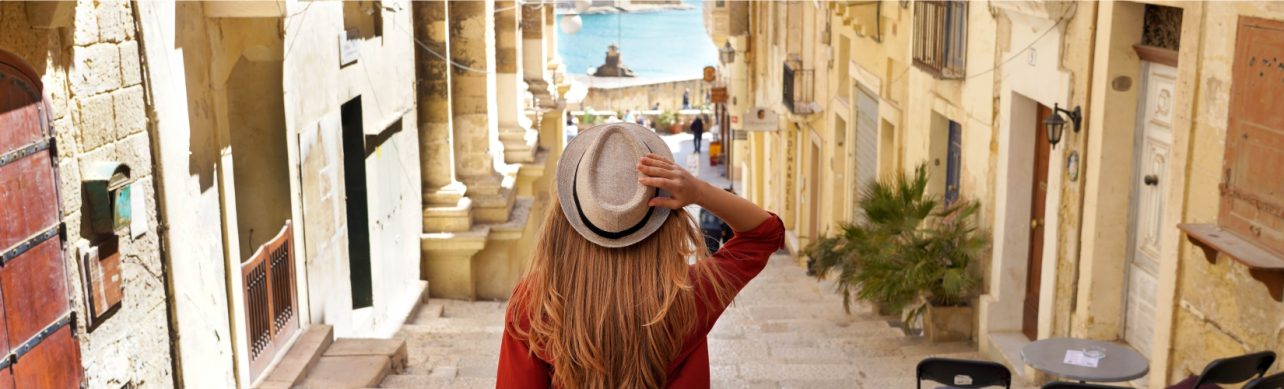
The Republic of Malta, a small island nation in the Mediterranean Sea, is steadily gaining popularity among immigrants. People choose to move to Malta because of a whole range of advantages. These include a stable economy, an English-speaking environment, a mild, sunny climate, business opportunities, a robust digital infrastructure, low taxation, high-quality healthcare, and a relatively low cost of living compared to mainland Western European countries.
Therefore, moving to Malta is an excellent choice for entrepreneurs, digital nomads, investors, affluent families and retirees. The Republic of Malta offers specific visa categories for all these groups. Furthermore, generous foreign investors can obtain EU citizenship after spending between one and three years in the country.
5 key advantages of Malta
- English is one of the official languages of the Republic of Malta, which significantly simplifies paperwork and the integration of the country’s new residents.
- Malta’s strategic location, combined with its membership of the EU and the Schengen Area, makes travelling in Europe much easier.
- Foreign pensioners, investors and active holiday makers are drawn to Malta’s mild Mediterranean climate and numerous picturesque beaches.
- The Maltese economy has become an ideal environment for building a career, particularly in rapidly developing sectors such as finance, high technology and tourism.
Digital nomads will appreciate the high-speed internet, the welcoming atmosphere for remote workers and the well-established professional community in the country.
Entrepreneurs are drawn to the political and economic stability of the Republic of Malta, tax incentives and the opportunity to access the large, affluent market of the European Union. - The high quality of life in Malta is due to economic prosperity, low crime rates, an excellent healthcare system, high-quality educational institutions and relatively low prices.
Popular routes for immigration to Malta
The type of residence visa largely depends on the method and purpose of moving to Malta. The specialists at Imperial & Legal will examine the most common options for obtaining a residence permit in this country:
- for digital nomads
- for employees;
- for entrepreneurs and business owners;
- for investors;
- for retirees;
- for wealthy expats.
Residence permit for digital nomads / Nomad Residence Permit
Digital nomads are foreign professionals and entrepreneurs who work remotely using modern telecommunications technologies, without being tied to a specific location.
The following citizens of countries outside the EU/EEA/Switzerland are eligible to obtain a Nomad Residence Permit in Malta:
- employees of foreign companies;
- entrepreneurs with their own business abroad;
- freelancers working for foreign clients.
Requirements for digital nomads in Malta
The categories of immigrants listed above will be able to reside in Malta and work remotely from abroad provided they meet the following requirements:
- Proof of remote work must be provided:
- Employees must provide a valid employment contract with a foreign company.
- Entrepreneurs must provide evidence that they are carrying out commercial activities through a business entity registered abroad of which they are the owner or shareholder.
- Self-employed individuals must provide service contracts with foreign clients.
- Digital nomads must also confirm that their activities generate an income of at least the threshold set by the Maltese immigration authorities.
As of January 2026, a digital nomad must earn at least €3,500 per month, equivalent to an annual income of €42,000, in order to obtain a residence permit in Malta. - Health insurance covering potential medical expenses in Malta and other EU countries is required.
- You must provide a tenancy agreement or documents confirming the purchase of property in Malta.
For how long is a residence permit granted to a digital nomad in Malta?
The Nomad Residence Permit is issued for 1 year. The permit may be renewed if the foreign professional continues to meet the legal requirements. The relevant application is submitted to the Maltese Department of Citizenship and Immigration.
What benefits attract digital nomads to Malta?
- A residence permit as a digital nomad allows you to live and work in this welcoming country without having to find a suitable job with a local company.
- During the first 12 months of their stay in the country, holders of a Nomad Residence Permit benefit from a preferential tax regime, which entails a zero tax rate on income from remote work, even if this money has been transferred to Malta. After 12 months, income from remote work is taxed at a preferential rate of 10%.
- The Republic of Malta has become home to a large professional community of expats. Moving to this jurisdiction offers digital nomads a unique opportunity to exchange experiences and forge new business connections.
Malta Work Visa
This immigration route is intended for professionals from non-EU countries who have received an offer from a Maltese employer.
Long-term employment implies that the foreign worker will remain in Malta for more than 6 months, so they will require a Category D residence visa to move there.
For professionals who have secured permanent employment in the Republic of Malta, there are several options for obtaining a residence permit.
1. Single Permit
This is the most common way to obtain a residence permit with the right to work.
To obtain a Single Permit, a foreign professional must meet specific requirements:
- An employment contract must be signed with a Maltese company. Furthermore, the employer in Malta must hold an Employment Licence.
- The applicant must provide documents confirming their professional qualifications.
A foreign specialist who has been granted a single residence permit may work only within the Republic of Malta, only for the company that invited them, and only in the specialism specified in the application.
2. Schemes for attracting highly qualified foreign professionals
If you possess high professional qualifications or a specialism in demand in Malta, you may take advantage of one of the following immigration schemes:
- EU Blue Card;
- KEI / Key Employee Initiative – an initiative for key employees, designed to attract professionals from third countries to managerial positions, as well as specialisms related to high technology;
- SEI / Specialist Employee Initiative – an initiative for those foreign qualified specialists who do not meet the requirements of the KEI programme but possess the necessary academic qualifications or professional and technical skills to work in Malta.
All three immigration programmes impose additional requirements regarding the minimum salary of the invited foreign employee.
The minimum acceptable salary in Malta for in-demand foreign professionals as of January 2026:
| Immigration scheme | Minimum annual salary before tax, € |
| EU Blue Card | 27,990 |
| KEI | 45,000 |
| SEI | 35,000 |
For how long is a Maltese residence permit granted to a foreign professional?
A residence permit is granted for 1 year, with the possibility of renewal provided the foreign professional meets the requirements of the immigration authorities.
Advantages of moving to Malta on a work visa
- The obvious advantages of this immigration route include the opportunity to live and work in a comfortable European country, where you can bring your immediate family members with you.
- Several years of legal residence in Malta give foreign professionals the opportunity to apply for a permanent residence card. It is not uncommon for holders of Maltese permanent residence to go one step further and, after some time, obtain citizenship of the country.
Residence permit in Malta for business owners and entrepreneurs / Malta Startup Residence Programme
The Maltese Startup Residence Programme is aimed at foreign entrepreneurs from countries outside the EU, EEA and Switzerland. It was designed to encourage the establishment of innovative start-ups in Malta by supporting the immigration process for their founders, co-founders, key employees and relevant immediate family members.
Eligibility criteria for the Startup Residence Programme
Applicants to the Maltese Business Immigration Programme must meet specific requirements:
- Demonstrate a firm intention to establish a new business in Malta, or to expand the presence of an existing overseas business into this jurisdiction by registering a branch.
This is best achieved through a well-drafted business plan. Our company’s staff provide services to draft business plans, complete with all necessary forecasts and financial indicators, for participants in the Maltese immigration programme. - Register as a sole proprietor or become one of the founders of a commercial enterprise in Malta. If the application is submitted by the owner/shareholder of an existing enterprise, it must have been registered no more than 7 years ago. Furthermore, the company:
- must not take over the business activities of another enterprise;
- must not have been formed as a result of a merger with other companies.
- If the applicant is a co-founder of the company, they must provide documents confirming their key role in establishing the start-up. For example, this could be a table showing market capitalisation in which the applicant holds a significant share, or evidence that the co-founder is a director or legal representative of their enterprise.
- When registering a start-up in Malta, the entrepreneur must invest funds – pay the company’s share capital. The minimum amount of paid-up share capital, depending on the start-up’s structure, will range from €25,000 to €100,000.
If a new company in the Republic of Malta is registered by several entrepreneurs, the specified funds will be sufficient for up to four co-founders to participate in the Startup Residence programme.
Generally, a single start-up in Malta allows six foreign business people to participate in the immigration programme. However, the amount required to pay the share capital will be increased by €10,000 for each additional founder. - Participants in the Startup Residence Programme must reside in Malta and pay taxes.
For how long does an entrepreneur participating in the Maltese Startup Residence programme receive resident status?
The first residence permit is granted to the start-up founder for 3 years. The residence card can be renewed for a further 5 years if the Maltese company remains operational and its founder continues to meet the criteria for participation in the immigration programme.
Benefits of participating in the Malta Startup Residence Programme
- Along with resident status, foreign entrepreneurs gain rapid access to Malta’s solvent market and entry into the vast market of the European Union.
- Start-ups benefit from support from the Maltese authorities, provided both through Malta Enterprise and via tax incentives for businesses.
- The entrepreneur’s family members can obtain a residence permit alongside them and move to Malta.
Permanent residence in Malta for investors / MPRP / Malta Permanent Residence Programme
The Malta Permanent Residence Programme is aimed at foreign investors from countries outside the EU, the EEA and Switzerland.
Key requirements for applicants to the Maltese investment programme
- Applicants must demonstrate that they have capital of:
- from €500,000, of which at least €150,000 must be in financial assets;
- €650,000, of which at least €75,000 must be in liquid form.
- Investments:
- Purchase of property in the Republic of Malta for a minimum of €375,000, or a 5-year lease of property for a minimum of €14,000 per year.
- Administrative fee – €60,000. Payable in two instalments: first €15,000 at the time of the investor’s application, then a further €45,000 once a letter of approval has been received from the Maltese Immigration Service.
The administrative fee will be increased by €7,500 if an adult dependant is added to the application. The investor also pays an additional €7,500 if they wish to apply for a residence permit for a relative after they have moved to Malta.
- Non-refundable government fee – €37,000.
- Donation to a non-profit organisation – €2,000.
Benefits of participating in the MPRP
- Applicants are granted a one-year Maltese residence permit almost immediately upon applying for the programme. Once approved by the immigration authorities, the investor becomes a permanent resident of the Republic of Malta for life.
- Participants in the Malta Permanent Residence Programme enjoy tax benefits. They have no tax liability on foreign income until it is transferred to Malta. They are exempt from tax payments such as capital gains tax and inheritance tax.
- Once they have become permanent residents, investors may stay in Malta for as long as they wish, without any additional conditions. They are not required to study, work or run a business. MPRP participants may leave the country for any length of time without losing their immigration status.
Malta Residence Permit for Retirees / MRP / Malta Retirement Programme
The Malta Retirement Programme, or retirement visa, is a popular immigration route for foreign pensioners from countries outside the EU, the EEA and Switzerland.
Benefits of the Maltese Retiree Visa
- The opportunity for unlimited residence in a comfortable and safe European country with a mild Mediterranean climate.
- Favourable tax regime – foreign pensioners can benefit from a flat 15% tax rate, which is levied on all income arising in or transferred to Malta.
- MRP holders residing in the Republic of Malta are exempt from tax on their foreign income, as well as from property tax and inheritance tax.
- Pensioners may bring their families with them to Malta.
Requirements for participants in the Malta Retirement Programme
- Finances and taxes. Despite the preferential income tax rate, participants in Malta’s retirement immigration programme must pay at least €7,500 in taxes each year. This minimum amount will be increased by €500 if an adult family member is included in the pensioner’s application.
Another selection criterion is the participant’s income structure – at least 75% of which must consist of their pension. As pension income usually forms the taxable base, only a financially secure pensioner can become a participant in the MRP. - Programme participants must invest funds in the purchase or rental of property in Malta. The rules for participation in the immigration programme set a minimum permissible value for the property being purchased, as well as a minimum annual rent.
Region Minimum value Purchase of property, € Renting property, € Malta 275,000 9,600 Gozo and southern Malta 220,000 8,750 - Malta must be the applicant’s primary place of residence under the immigration programme. The time spent in another jurisdiction must not exceed 183 days. During the first 5 years after moving to Malta, the average annual period spent abroad by the pensioner must not exceed 90 days.
- Applicants must take out insurance covering their potential healthcare costs in Malta and EU countries.
- Foreign pensioners are not permitted to work in paid employment, as there is a separate visa category for this purpose. There are exceptions to this rule. For example, where a programme participant holds the position of director in their own company abroad. For further information on this matter, please contact the consultants at Imperial & Legal.
For how long is a Maltese residence card issued to an MRP participant?
The first residence permit for a foreign pensioner is granted for 1 year. The immigrant will be able to extend their residence card for a further 2 years, provided they meet the programme’s requirements.
Residence permit for high-net-worth expats / GRP / Global Residence Programme
The Maltese Global Residence Programme is an attractive way for wealthy foreign nationals who are not citizens of the EU, EEA or Switzerland to obtain a residence permit in Malta. The main advantage of the GRP is the special status granted to programme participants, which helps them make significant tax savings.
Key requirements for GRP participants
- The income of a high-net-worth expat participating in the Global Residence Programme must come from overseas sources and be sufficient to avoid the need for state assistance.
- It is necessary to take out insurance that covers the expat’s medical expenses in Malta and EU countries.
- The applicant must also purchase or enter into a long-term lease for property in the Republic of Malta. Minimum thresholds have been set for both the value of the property purchased and the amount of rent. In the GRP, these are the same as in the Maltese immigration programme for pensioners.
- In accordance with the rules for participation in the immigration programme, the minimum amount of tax liability for an expat is €15,000 per year, even if only a small portion of their foreign income is transferred to Malta.
- If immigrants who have obtained a residence permit under the Global Residence Programme plan to work as employees in Malta, they will need to obtain a separate permit.
Tax optimisation for GRP participants
By joining the Global Residence Programme, a wealthy foreign national is able to pay tax on income transferred to Malta at a favourable rate of 15%. It should be noted that a minimum annual tax liability applies to such immigrants, as mentioned earlier.
An expat participating in the GRP can take advantage of a further tax benefit, involving a zero tax rate on capital gains from foreign capital, provided that the funds received in this way have been transferred to the Republic of Malta.
Other opportunities for participants in the Global Residence Programme in Malta
The following benefits are particularly worth mentioning:
- the possibility of obtaining a residence permit in Malta for family members;
- visa-free travel within the Schengen Area;
- no residency requirements.
For how long is a residence permit granted to a participant in the Global Residence Programme?
Initially, participants in Malta’s immigration programme for high-net-worth expats are granted a one-year residence card. Upon expiry of the first residence permit, immigration status may be extended for a further two years.
How Imperial & Legal makes moving to Malta simpler and more cost-effective
For the average person with no practical experience in the field of international immigration and corporate law, it can be difficult to move to another country and set up a business, even if that country is hospitable Malta.
However, you can always contact Imperial & Legal so that our specialists can take care of the bulk of the paperwork and dealings with the Maltese authorities. We provide comprehensive support on matters such as:
- selecting the most suitable immigration programme in line with the client’s wishes and circumstances;
- expert legal advice at every stage of the legalisation process in Malta – from preparing documents to obtaining a residence card;
- assistance with finding and purchasing/renting property in the Republic of Malta;
- company registration, tax registration, and advice on preparing initial financial statements;
- advice on tax optimisation for both businesses and individuals;
- legal support for participants in investment immigration programmes, including those investing to obtain Maltese citizenship.
If you are considering moving to a comfortable European jurisdiction with unique opportunities, contact the consultants at Imperial & Legal to bring your plans to life as smoothly as possible!