Moving to Portugal in 2026
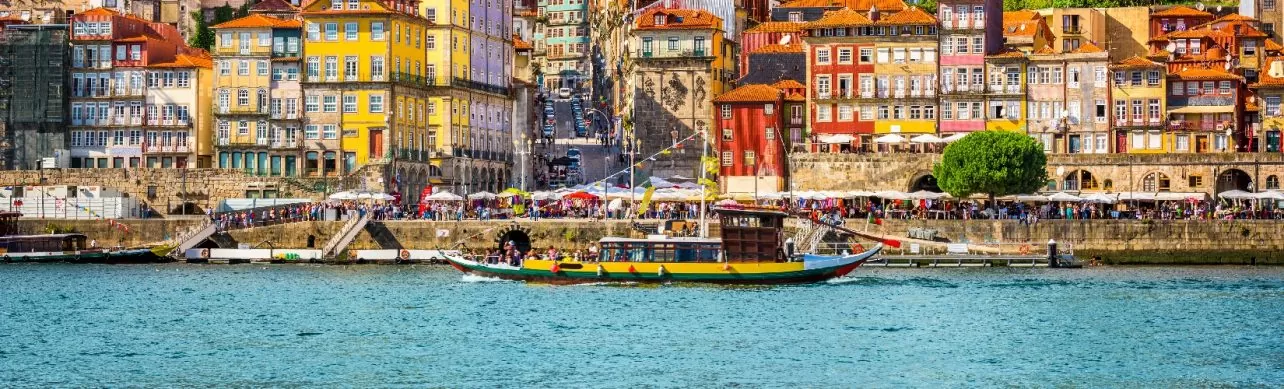
Portugal is one of the most comfortable countries in modern Europe. This thriving country has a mild climate and relatively low cost of living, complemented by a high quality of life thanks to its economic prosperity, modern healthcare system, high safety standards and rich cultural heritage.
Advantages of living in Portugal
1. Favourable climate
When you move to Portugal, you will enjoy a comfortable climate, with little variation in temperature from north to south and 300 days of sunshine a year.
2. Safety
Safety is a key aspect of the quality of life in Portugal, making the country attractive to those looking for a peaceful and relaxed place to live. In 2021, the Portuguese Republic ranked 4th in the Global Peace Index, an international ranking of the safest countries to live in.
3. Healthcare
Residents of Portugal have access to a high-quality, modern healthcare system, which is maintained by numerous public and private clinics.
4. Tax benefits
Portugal offers foreign investors, entrepreneurs and innovators the opportunity to save on taxes. In 2026, the Portuguese authorities are offering significant tax incentives to foreigners whose innovative business projects contribute to the dynamic development of the country’s economy.
5. Variety of visa programmes
Whether you are investing in the economy, working remotely, starting your own business or simply looking for a comfortable and safe place for a well-deserved rest, visa programmes can help you become a resident of Portugal on favourable terms.
Who usually moves to Portugal on a residence visa?
As a rule, this country is chosen by wealthy foreign citizens with medium to high incomes:
- investors
- wealthy families;
- digital nomads — hired specialists and freelancers working remotely;
- entrepreneurs and small business owners;
- pensioners;
- family members of foreigners who have moved to Portugal;
The main ways to move to Portugal
There is a separate immigration route for each of the above categories of immigrants in Portugal:
| Visa | Who is it suitable for? |
| D7 | Pensioners, rentiers, bank depositors, investors. |
| D8 | Digital nomads. |
| D2 | Entrepreneurs, self-employed individuals, and start-ups. |
| Golden Visa / HQA | Investors. |
| D4 | Students participating in student exchange and professional internship programmes. |
| Family reunification | Family members of Portuguese residents. |
Popular visas for moving to Portugal
D7 visa
The D7 category is granted to financially independent foreign citizens with sufficient passive income and personal savings in a bank account. These include wealthy pensioners, affluent families, investors, rentiers and bank depositors.
Financial requirements
The financial requirement for this visa has two components:
- Minimum income from passive sources.
- Minimum amount of savings of the applicant.
Minimum passive income – the minimum regular income that an applicant must show in order for their application to be approved. This indicator is linked to the minimum wage in Portugal. Immigration with a family increases the minimum acceptable monthly income:
- 50% of the minimum amount if the spouse is obtaining a visa;
- 30% of the minimum amount if a visa is required for a minor child.
In figures, in the first half of 2026, the minimum income for one immigrant is €870 per month or €10,440 per year.
The minimum amount of savings is the amount of the applicant’s personal savings in a bank account that they will be able to dispose of after moving to Portugal. Currently, it is €10,440, which is the minimum acceptable income for 12 months.
Common mistakes
- D7 visa applicants often make one mistake: they show the minimum acceptable income and minimum savings, when these figures are nothing more than a guideline. The more confirmed passive income and savings you have, the more likely you are to receive a positive decision on your application.
- Although the immigration authorities do not require all your savings to be transferred to Portugal, a significant portion of these funds must be available to you after immigration.
- The D7 visa is a resident visa, so its holder must not be absent from the country for more than 183 days per year. And if you plan to move to Portugal and extend your current residence permit, the total time of absence from the country must not exceed 8 months.
D8 visa
Category D8 is a visa created to attract digital nomads, entrepreneurs, freelancers and hired specialists to Portugal, whose work is carried out remotely and for foreign clients/employers.
Financial requirements
To get a resident visa approved, a digital nomad needs to regularly earn at least €3,480 a month, which is 4 times the minimum wage in Portugal. Plus, they need to have 12 times the minimum Portuguese wage (€10,440) in their bank account as a “financial cushion”.
The income and savings requirements listed above will be higher if the digital nomad moves to Portugal with their family.
Advantages and differences from the D7 visa
Digital nomads receive the full range of benefits available to Portuguese residence visa holders, including:
- visa-free travel to 29 jurisdictions within the Schengen area;
- the possibility of obtaining a residence permit in Portugal for their family;
- the opportunity to become a permanent resident and obtain European citizenship through naturalisation;
- the opportunity to give their children a high-quality education at prestigious universities in Portugal.
Unlike the Portuguese visa for financially independent individuals, applicants for a D7 visa are subject to stricter financial requirements.
Digital nomads must receive income from remote work for an employer or client located abroad. Meanwhile, D7 visa holders can take up employment with local companies and do business in Portugal.
D2 visa
Within the D2 immigration category, there are three paths to obtaining a Portuguese residence permit:
1. For entrepreneurs
The applicant must demonstrate their intention to register a new company in Portugal or a Portuguese branch of a foreign company they own and invest a significant amount in its development.
2. For self-employed persons
In this case, the grounds for obtaining a visa are contracts and agreements with Portuguese clients, the applicant’s willingness to register their activity in the country and pay taxes.
3. For start-ups
The Startup visa is issued in three stages. First, the business idea is posted on the website of IAPMEI, Portugal’s government agency for competitiveness and innovation.
Then, the authors of a promising idea for a new start-up sign an agreement with one of the accredited entities in Portugal and receive a declaration of approval from IAPMEI.
An application for a D2 visa is submitted to the Portuguese consulate along with a package of documents, including the agreement with the business incubator and the IAPMEI declaration.
The importance of a business plan
The key document for a foreign entrepreneur applying for a Portuguese D2 visa is the business plan.
In order for your business plan to demonstrate the viability of the project, it must meet the following requirements:
- be as realistic as possible and based only on reliable data;
- include verified financial calculations;
- show how much you are willing to invest in your business project;
- give an idea of how your company will contribute to Portugal’s economic development – create new jobs, offer a unique product or service on the local market, etc.
If you are having difficulty writing a competent business plan, entrust this work to our company’s specialists!
Company registration in Portugal
An entrepreneur visa requires that, after moving to the Portuguese Republic, the entrepreneur not only applies for a residence card, but also registers their company.
Imperial & Legal staff will help you choose the appropriate corporate form and name, prepare the articles of association and memorandum, and assist you in opening a bank account for the company.
Next, an application for registration of a new company is submitted online on the Portuguese government website. At the client’s request, after incorporation, we can provide detailed advice on tax optimisation and the preparation of annual reports.
Investor visa
Golden Visa
The Golden Visa programme is a relatively simple option for obtaining a Portuguese residence permit, with a minimum of additional requirements for participants.
By 2026, the Portuguese immigration programme for investors has undergone significant changes. Buying property in Portugal is no longer a suitable investment for obtaining a Golden Visa.
Due to lengthy bureaucratic procedures and approvals, the process of immigrating to the Portuguese Republic takes up to 24 months for programme participants.
Nevertheless, the Portuguese investment programme remains popular, as Golden Visa holders only need to spend 7 days a year in Portugal. At the same time, they do not lose their right to apply for permanent resident status and European citizenship after a few years.
Investment options for participation in the Portuguese Golden Visa programme
| Where is the investment made? | Amount, €, аrom | Conditions |
| Investment fund | 500,000 |
|
| ||
| Scientific research | 500,000 |
|
| Artistic and cultural projects | 200,000 |
|
HQA
Highly Qualified Activity Visa – an alternative to the investment programme developed by the Portuguese government for ambitious entrepreneurs and high-class specialists. This visa category allows enterprising investors to obtain a Portuguese residence permit much faster and with less investment.
To participate in the HQA programme, an entrepreneur must register an innovative start-up in Portugal and/or invest funds in a project carried out by a research centre supported by the Portuguese government. The cost of participating in the investment programme is approximately €175,000. This amount includes funds that will be spent on research work and all official payments.
For 3 years, a start-up entrepreneur who has moved to Portugal on an HQA visa can count on the operational support of a leading Portuguese business incubator while their research project is being implemented.
Thus, unlike Golden Visa holders, participants in the Portuguese HQA programme usually take part in their business project, although they determine the degree of their involvement themselves.
Two indisputable advantages of the HQA visa are:
- no need to be physically present in Portugal;
- the speed of obtaining a residence permit, which takes only 4-5 months.
If you are interested in Portugal’s new immigration programme for investors, please contact Imperial & Legal for a consultation.
Cost of moving to Portugal
Fees for obtaining a residence permit in Portugal for one person
| Visa | Consular fee | AIMA fee for granting a residence permit |
| D7 for financially independent persons | €110 | €160 |
| D8 for digital nomads | €110 | €170 |
| D2 for entrepreneurs | €110 | €160–€180 |
| Golden Visa | €605.10 | €6,045.20 |
| HQA Visa | €110 | €197 |
The table does not include the cost of applying to the visa centre – from €40, immigration lawyer services, purchasing medical insurance, apostille and translation of documents, as well as the cost of obtaining a residence card – from €82. One of the advantages of working with Imperial & Legal is that at the planning stage, clients are informed of all the costs of legalisation in Portugal.
Cost of living in Portugal
There is a widespread belief that expats in Portugal enjoy a European level of comfort and security for relatively little money compared to leading European countries. Is this really the case?
The minimum cost of living for one person in Portugal in the second half of 2025 is just over €680 per month. This amount includes the cost of a food basket with so-called “essential products”, which is about €235, but does not include the cost of renting accommodation.
Renting a one-bedroom flat will cost an immigrant an average of €720-970 per month. The rent depends on the area, size and condition of the property.
The rent does not include utility bills, which amount to €110-120 per month for a one-bedroom flat.
Based on the data reviewed, we can conclude that the cost of living in Portugal is indeed lower than in other Western European countries. However, to live comfortably in this country, you need to earn at least €2,000 per month. A monthly income of €3,000-5,000 will allow even a family immigrant to move to the Portuguese Republic without any difficulties.
Which city in Portugal should you choose to move to?
The choice of city is often dictated not only by the personal preferences of the relocator, but also by the reasons for moving to Portugal.
- Porto and Lisbon, modern large cities with well-developed infrastructure, are chosen by immigrants who want to start their own business or find a high-paying job.
- Albufeira, Cascais and Estoril, with their relatively mild climate, beautiful nature and wide range of entertainment options, are chosen by financially independent foreigners and digital nomads.
- Coimbra and Braga attract expats who like old, colourful cities with a rich historical and architectural heritage.
Taxes and tax breaks in Portugal
Depending on their income, tax residents of the country pay between 12.5% and 48% income tax. Foreign residents are required to pay 25% tax on income earned in Portugal.
The Portuguese authorities encourage innovation and scientific research in the country by offering tax incentives under the IFICI (Incentivo Fiscal à Investigação Científica e Inovação) scheme to foreign businesspeople and specialists.
The IFICI preferential tax regime sets a fixed rate of 20% tax on income from the expatriate’s employment, professional or commercial activities. Moreover, under IFICI, income tax is not levied on such immigrants’ foreign profits.
To find out if this preferential tax regime is right for you, contact Imperial & Legal’s tax advisors!
Permanent residence and citizenship in Portugal
Residence permit renewal
After spending two years in the Portuguese Republic on their first residence permit, a significant number of expats extend their resident status for another three years.
The key condition for renewal for almost all resident categories, except for the Golden Visa/HQP, is the immigrant’s continuous stay in the country. In terms of numbers, this means at least 183 days per year and at least 16 months during the two-year validity period of the first resident card.
The second key condition for renewal is that the relocator meets the requirements applicable to their visa category.
Permanent residence and second citizenship
Citizens of non-EU countries can apply for a permanent residence permit in Portugal after they have legally resided in the country for 5 years.
In order to be eligible to apply for permanent residence in Portugal, you must pass a Portuguese language test. Prospective permanent residents need only demonstrate proficiency at level A2 according to the European classification.
Portuguese citizenship can also be obtained after five years of legal residence in the country. Residents must be well integrated into the local community and pass a Portuguese language test.
Unfortunately, changes in immigration law, which are likely to come into force in 2026, will increase the period of legal residence in Portugal required for naturalisation from 5 years to:
- 7 years for citizens of Portuguese-speaking jurisdictions and EU nationals;
- 10 years – for citizens of other countries.
How Imperial & Legal specialists make your move to Portugal easier
Our company takes an individual approach to each client. This is the only way we can take into account all the circumstances and wishes of the person who has come to us. Moreover, moving away from template methods helps us to provide the client with a ready-made turnkey solution, taking on a significant part of the tasks involved in obtaining a Portuguese residence permit.
During the preparation stage, we:
- help you choose the optimal visa category;
- collect and prepare all the necessary documents for submission.
During the interaction with the immigration authorities, we will:
- make an appointment for you at the consulate and at AIMA;
- handle communication with the authorities if any additional questions arise.
Our cooperation will continue in Portugal when you need to:
- rent or buy accommodation;
- register with the tax office;
- open a bank account;
- register a company;
- optimise your taxes;
- extend your residence permit, obtain permanent resident status or European citizenship.
In their work, Imperial & Legal consultants take into account all changes made to Portuguese immigration law and the rules for participating in visa programmes.