How to move to Switzerland in 2026
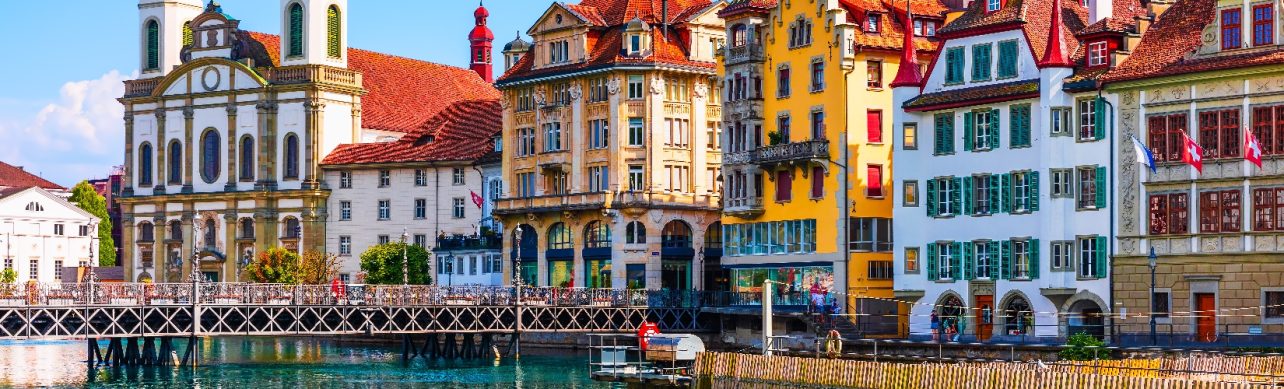
Switzerland is one of the most attractive places in Europe for immigration. The high quality of life in this country is due to political stability, a strong economy and a safe environment.
People often travel to the Swiss Confederation to improve their health in state-of-the-art clinics. Parents choose this jurisdiction to give their children a brilliant world-class education at local universities.
5 reasons to move to Switzerland
High quality of life
In addition to the political and economic stability mentioned above, the standard of living in the Confederation is positively influenced by a clean environment, low crime rates and state support for the population.
Career opportunities
Switzerland’s thriving economy, low unemployment rate and focus on innovation create a favourable environment for career growth in many industries. Professionals value this country for its high salaries and the opportunity to participate in global projects.
Business opportunities
Entrepreneurial foreigners view Switzerland as a unique jurisdiction for registering a company, where laws are designed to protect private and corporate property. To understand the secret of the country’s success among businesspeople, add to this advantage a predictable tax system, reliable banks, no currency controls, the ability to produce goods labelled “Swiss made”, access to a skilled workforce and a large, solvent market.
Opportunities for study
Switzerland has an effective secondary and higher education system, represented by an extensive network of public and private schools, as well as world-class universities.
For example, in 2025, the Swiss Federal Institute of Technology Zurich – ETH Zurich, ranked 5th in the ranking of the world’s leading technical universities.Travel opportunities
The Swiss Confederation has a unique location in the heart of Europe. Its cantons are connected by a well-developed transport infrastructure. A Swiss residence permit allows visa-free travel to 29 countries in the Schengen area.
Which Swiss city is best suited for relocation?
In this age of globalisation, Switzerland remains a country full of surprising contrasts and cultural diversity. The locals speak four languages: German, French, Italian and Romansh.
The choice of city to move to depends entirely on you and how you want your life in Switzerland to be.
- Geneva is a French-speaking city on the shores of a picturesque lake, which has become home to many large international organisations.
- Zurich is the economic centre and largest city of the Swiss Confederation. It is this dynamic city that attracts ambitious professionals and entrepreneurs.
- Basel is Switzerland’s third largest city, located on the border with France and Germany. Basel attracts expats with its comfort and relaxed atmosphere.
- Lugano is considered the unofficial capital of Italian-speaking Switzerland. The advantages of Lugano are its mild climate, which is more measured than in Zurich and Geneva, its pace of life and its stunningly beautiful architecture.
Visa for moving to Switzerland – 7 common immigration routes
Work visa
The term “permit” and Latin letters are used to designate visas in Switzerland. The following types of visas are available to citizens of other countries in this country:
- Permit L – a short-term work visa valid for up to 12 months. Holders of this type of visa cannot change employers and must reside in the same Swiss canton where they obtained their job. If these strict requirements are met, an extension is possible.
- Permit B – residence permit. Issued to foreign workers who have signed an employment contract with a Swiss employer for a period of 12 months or for an indefinite period . This type of permit is also valid for 12 months and can be extended if necessary.
- Permit C – a permit granting permanent residence – PR. Only available to immigrants who have lived in Switzerland for 5 to 10 years. Along with PR, foreign specialists get unlimited access to the Swiss labour market.
- Permit G – a permit for cross-border travel for foreign specialists who live in neighbouring countries and come to Switzerland for work.
The procedure for obtaining a category B visa is as follows:- The employer makes a job offer and justifies the need to hire a foreigner.
- The employer submits an application to the canton, and the authorities assess the situation on the labour market.
- The canton’s decision is sent to the federal SEM for final approval.
- After two approvals, the employer draws up and sends the employment contract.
- The employee submits a visa application to the consulate, attaching the signed contract and the necessary documents.
Business investment visa
To stay in Switzerland on a business investor visa, an entrepreneur will need to register or acquire a local company that will create new jobs and make a significant contribution to the development of the local economy.
Financial requirements
The law does not set a minimum amount for business investment. However, in practice, visa applicants must demonstrate to the cantonal authorities that they have sufficient funds to make the investment, hire employees and maintain the company’s operations in the long term.
The process of obtaining a visa for business investment
The key document for an investor is a well-written business plan, backed up by market analysis and evidence of the availability of funds to finance the project. In essence, the business plan and documents on the financial condition of the visa applicant demonstrate their intention to carry out commercial activities in Switzerland that will benefit the economy of the country or a particular canton.
When deciding on an application, the authorities assess the business plan according to the following parameters:- How many new jobs will be created for Swiss and EU nationals?
- How much corporate tax will the investor’s Swiss company pay?
- Will the business meet the real needs of the market?
First, the application and documents are submitted to the cantonal authorities, who must approve it before it is sent to the SEM. In order to obtain approval for the application at the cantonal and secretariat level, experienced entrepreneurs consult with our company’s consultants at the business plan preparation stage.
Successful applicants are granted a Permit B, a one-year residence permit in Switzerland. To extend their stay in the country after one year, investors must meet the eligibility requirements: register or purchase a company, invest a certain amount in the development of their business, and bring clear economic benefits to the canton and/or the country.
Investor visa
Wealthy citizens of countries that are not members of the EU and EFTA – European Free Trade Association can obtain a Swiss residence permit for investment in the form of an annual fixed tax, the amount of which depends on the region and the investor’s wealth. This payment is at least 200-250 thousand Swiss francs per year, which is equivalent to €214-268 thousand.
To reside in the country, such immigrants are also granted a Permit B, valid for one year with the possibility of extension.Visa for self-employed persons
Switzerland does not have a separate visa category for self-employed foreign specialists. A sought-after foreign freelancer from a country that is not a member of the EU/EFTA can apply for a residence visa (Permit B) after registering in Switzerland as a sole trader.
As in the case of business investors, the cantonal and federal authorities will only grant permission for self-employment if you prepare a competent business plan showing that your activities will be economically beneficial to the canton and Switzerland, and if you can demonstrate that you have sufficient financial resources.
The Swiss cantonal authorities and SEM are quite loyal to freelancers from EU and EFTA countries – start-up sole traders from Europe are immediately granted a five-year residence permit. Meanwhile, many expats from third countries postpone the idea of self-employment until they obtain a permanent residence permit in Switzerland.Student visa
Foreign applicants must pass entrance exams to enter a Swiss university, especially if their secondary school leaving certificate from their country does not correspond to the Swiss Matura certificate. In addition to documents confirming successful completion of secondary school, prospective students must know a foreign language. In Switzerland, education can be conducted in German, French, Italian or English.
To move to the Swiss Confederation on a student visa, a citizen of a country that is not a member of the EU/EFTA must:- Enrol in a full-time programme at a Swiss university.
- Prepare an application and make an appointment at the Swiss consulate.
The application must be accompanied by a package of documents, which, in addition to a passport, photographs, medical insurance and a police certificate, must include:- a letter from the university confirming enrolment, as well as documents confirming payment of tuition fees;
- proof that the applicant has sufficient funds to cover living expenses – at least 21,000 Swiss francs, or approximately €22,470 per year;
- proof of accommodation in Switzerland, e.g. a long-term rental agreement;
- a letter of motivation;
- a written commitment to leave the country after completing your studies.
- Apply for a category D residence visa at the Swiss consulate or visa centre at least 3-5 months before moving.
- Upon arrival for your studies, register with the cantonal immigration office within 14 days.
Pensioner visa
Well-off pensioners from EU/EFTA countries and third countries can also obtain a residence permit in Switzerland, provided they meet a number of eligibility requirements.
The Swiss Confederation imposes fewer requirements on European pensioners. They do not need an entry visa to visit Switzerland, but they must register with the local immigration office within two weeks of moving.
Pensioners from third countries must apply for a pensioner visa to move to Switzerland. The visa application will be approved if the applicant meets the following requirements:- The applicant for a pensioner visa must be at least 55 years old.
- The pensioner must have a personal connection to Switzerland.
- The applicant must have sufficient funds to live in Switzerland. The amount of income is determined individually for each application. The following annual income can be used as a guideline:
- from 25,200 Swiss francs for a single pensioner;
- from 32,100 Swiss francs for a married couple.
- This income must be passive. Foreign pensioners are not allowed to work or do business, but they are allowed to manage their investments.
- To move to Switzerland, foreign pensioners must purchase insurance that will cover their medical expenses.
- A pensioner’s visa is a resident visa, so the holder must spend at least 183 days a year in Switzerland.
The most popular Swiss cantons among foreign pensioners are Uri, Glarus, Appenzell Ausserrhoden and Ticino. The choice is due to low taxes and relatively inexpensive living costs combined with a friendly atmosphere.
Visa for family reunification
A family reunification visa is intended for relatives of immigrants already living in Switzerland to move to the country. A residence permit for family reunification is usually granted for the same period as that of the sponsor.
Who can apply for this visa?
Close relatives of a Swiss resident or citizen – spouses, partners, children and parents. Foreign students can only invite dependent spouses and minor children to the country.
Where is the application submitted?
At the Swiss consulate or visa centre in the country of residence of the family members being reunited.
What are the requirements for the sponsor?
The host must earn enough to be able to invite relatives to the Confederation. The sponsor must also have sufficient space in their own or rented accommodation to accommodate the family. To find out what income and accommodation requirements apply to sponsors in your canton, please contact Imperial & Legal consultants.
Do invited family members need to know the language?
The requirement varies depending on the canton. Some regions require immigrants arriving on family reunification visas to be proficient in one of Switzerland’s official languages. Other cantons only require relatives to enrol in integration courses.
General requirements for obtaining a residence permit in Switzerland
- The key requirement for all visa categories is proof of the purpose of moving to the country. For example, family members of a Swiss Confederation resident must provide a letter from their sponsor, and start-up entrepreneurs and self-employed persons will not be able to obtain a residence permit without a business plan and approval from the cantonal authorities.
- Applicants for a residence visa must prove that they have sufficient funds to live in Switzerland. Bank statements, tax returns and employment contracts can be used for this purpose.
- Medical insurance covering all medical expenses for 12 months is mandatory.
- A police certificate confirming no criminal record must be provided.
- For some immigration routes, applicants are required to show a long-term rental agreement for accommodation in Switzerland.
All official documents in languages other than those that are official in the Swiss Confederation must be apostilled and accompanied by a certified translation.
How does the process of obtaining a residence permit in Switzerland differ from immigration processes in other European countries?
A distinctive feature of immigration to the Swiss Confederation is the absence of fixed financial requirements for certain types of visas.
As you may have noticed, a number of Swiss residence visas discussed in our article can only be obtained with the prior approval of the cantonal authorities.
Permanent residence and Swiss citizenship
Permanent residence
To apply for a Permit C, you must have lived in Switzerland for at least 10 years on a Category B or L residence permit, with the last 5 years of residence being continuous.
Citizens of certain countries, e.g. the USA, Canada and the UK, can become permanent residents of Switzerland after 5 years.
The period of residence on a student visa is not usually included in the length of residence required to obtain permanent residence, although there are exceptions to this rule.
Additional requirements for obtaining permanent resident status:
- Knowledge of one of Switzerland’s official languages. Your language skills must be at least A2 level according to the European classification.
- Financial self-sufficiency. Applicants for a Permit C must prove that they have a stable job or other legal source of income that allows them to avoid seeking assistance from social services.
- Good reputation. Prospective permanent residents of Switzerland must not have any criminal convictions or recorded offences that pose a danger to society.
Citizenship through naturalisation
The normal process of obtaining citizenship through naturalisation is available to residents who:
- have obtained a Permit C;
- have lived in Switzerland for a total of 10 years, of which 3 of the last 5 years were spent in the canton where the application for citizenship was submitted;
- can prove successful integration into Swiss society – familiarity with the history and culture of the country, support for the Swiss way of life, proficiency in at least one official language, no need for social support, and a good reputation.
Where do I apply for citizenship?
An application for citizenship through naturalisation is submitted to the authorities of the Swiss commune or canton where you have lived for at least 3 of the last 5 years.
Taxes in Switzerland
The income of individuals who are tax residents of Switzerland is taxed at the federal level, as well as at the level of individual cantons and communes. The federal income tax rate for individuals is 11.5%. The cantonal and municipal income tax rates vary depending on the territory and are added to the federal rate. Thus, the income tax rate in Switzerland can vary from 22.1% to 45.5% depending on the canton and municipality.
Income from businesses or real estate abroad may not be taxable, but these amounts will be taken into account when calculating the tax rates that apply to the resident’s other income.
Wealthy expats in Switzerland can take advantage of the favourable lump-sum tax regime, in which all of the taxpayer’s living expenses are used to calculate the tax base, rather than their actual income or wealth.
For more detailed information on tax optimisation in the Swiss Confederation, please consult the specialists at Imperial & Legal.
How Imperial & Legal helps you move to Switzerland
We take an individual approach, as moving to Switzerland is almost always associated with long-term plans and goals that go beyond simple visa support.
- For wealthy clients, we help with tax structuring, choosing a canton, and organising the relocation of their families.
- For entrepreneurs, we prepare a business plan, register a company, open an account, and assist with hiring and operational issues.
- For hired employees, we expedite paperwork and assist with adaptation after relocation.
- For students, we assist with visas, housing, and subsequent status changes.
- For pensioners — we select a suitable canton, organise the move and resolve everyday issues.
By contacting Imperial & Legal, you will receive comprehensive legal support at all stages of obtaining a residence permit and moving to Switzerland.